Showing posts with label Museum. Show all posts

Friday, June 17, 2011

How to Keep Score

I’ve been playing and coaching baseball and softball for more than fifty years now, and one of the absolute joys of the game is keeping score and compiling statistics. The different eras of baseball, after all, can be contrasted and compared better than any other sport, because of statistics.

In my basement you’ll find box after box crammed with scorebooks, and while they primarily serve as historic snapshots of by-gone games played by by-gone players, those books also vividly demonstrate that the standard guidelines for keeping score are more often than not replaced by abstract offerings from the mostly ignorant masses searching for ways to interpret and record what just happened on the field.

In amateur ball, the person responsible for scorekeeping may vary from inning to inning, game to game. And each scorekeeper, guaranteed, brings his or her special nuance to the page. To record an infield putout, for example, some game trackers use the conventional system wherein numbers are assigned to each defensive position. A 6-3 putout means the shortstop (6) fields a grounder and throws to first (3) for the out. But I’ve seen that same play recorded by letters: GO (groundout), S-1st.

And while there are as many ways to keep score as there are scorekeepers, there’s something else going on that’s worth mentioning here. Scorekeeping seems to be going the way of the dinosaur. If I ask some of the young guys on our softball team to keep score, they look at me like I’ve got a hole in my head! They don’t know how. Go to an Orioles game and look around. Virtually no one keeps score any more. In the fifties, sixties and seventies, you went to the ball game, bought your game program with the scorecard, and kept score. I remember asking my father how to record tricky plays, over and over and over.

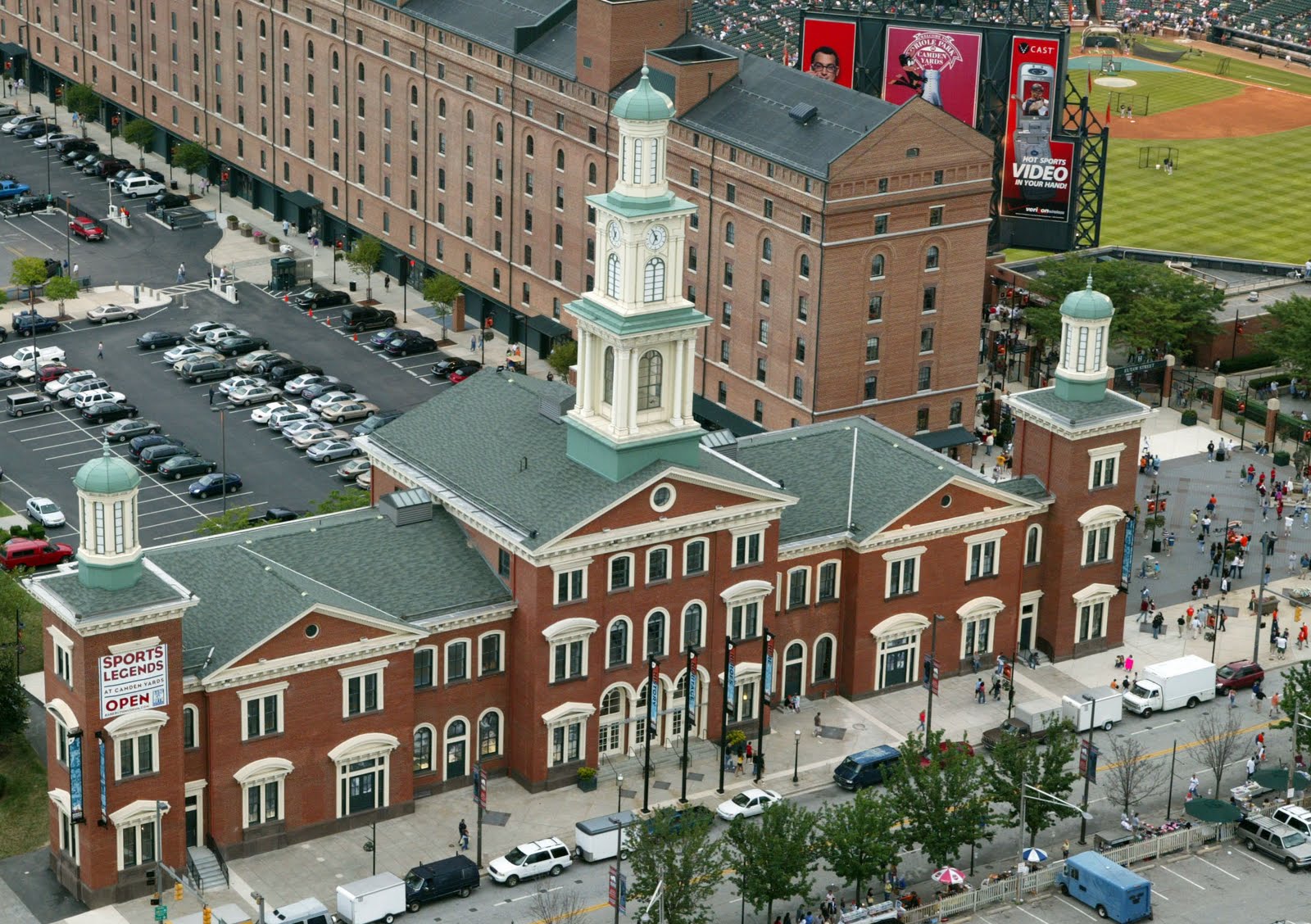
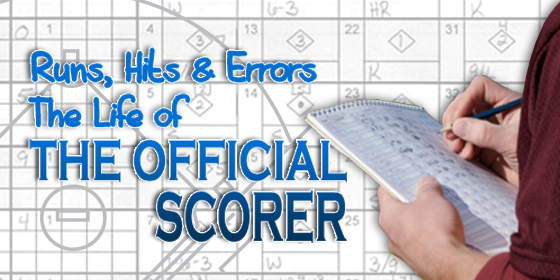
All of which leads me to announce that on Saturday, June 25, at 4pm at Sports Legends, we are going to have a program on how to keep score. Every MLB game is recorded by an official scorer provided by the home team. It is his job to keep score, rule on whether a play is a hit or error, and interpret the game according to official scorekeeping standards. Jim Hennemann is the Orioles official scorekeeper. Bill Stetka used to be. Both will be at Legends to discuss and demonstrate how to keep score…the right way.

But -guaranteed- they will tell you that even in their official capacity they still find ways to deviate from the norm, which makes every page of every scorebook a unique interpretation of another chapter of the greatest game ever invented, our national pastime.

Come on down to Legends; you’ll be glad you did.

Mike Gibbons is the executive director for the Babe Ruth Birthplace Foundation, Inc.

Friday, April 15, 2011

How Many Ever Wanted to Work at a Museum?

I teach part-time at one of the local universities, adjunct professor is what they call me, and, as a way of introducing myself at the beginning of each semester, I ask the class: “How many of you grew up wanting to work at a museum?” In the twenty-six years I’ve been doing this, only one student – one out of maybe 1,000 kids - ever raised their hand.

But even though the overwhelming majority of us never contemplate the museum field during our formative years, those of us who actually embed in the industry find the work fascinating, invigorating and something we can joyously do over the course of our entire professional careers.

And here’s why.

Most everybody we know enjoys storytelling. That’s what human beings do. We tell stories, listen to stories, read books, watch movies, peruse the internet and grab every newspaper, magazine, flier and brochure we can in search of the next story. Museum workers take huge delight in their day-to-day because, bottom line, they get to tell stories…for a living!

That certainly is true in the dynamic world of sports heritage where I’ve been hanging my hat for the past three decades. I get to take an artifact, let’s say a Babe Ruth bat, and then ‘interpret’ some component of his baseball career, maybe his home run prowess, using the bat as my point of reference.

A while back I was giving a Sports Legends Museum tour to former Green Bay Packer quarterback great Bart Starr. We paused in front of a case featuring the Baltimore Colts legendary QB, Johnny Unitas. I showed Bart Unitas’ first pro contract from 1956, which stipulated a $7,000 annual salary. Bart said, “That was my first year, too.” I asked him how much he made that year, and he replied, “$6,500; John beat me again!” And so that artifact, that 1956 Unitas contract, sparked a wonderful, off the wall story that drove straight to the competitive nature of both Starr and Unitas!

Museum work, where every day holds the promise of the next good story. Be sure to tell the kids.

See you out there!

Mike Gibbons is the executive director for the Babe Ruth Birthplace Foundation, Inc.